

All About Epiphytes
What is an Epiphyte?
An epiphyte is a type of plant that primarily grows on supportive structure, such as branches of a tree, rather than rooted in the ground. Many houseplants, even some of your favorites, are classified as epiphytes, and display such attributes in their rooting structure. It is notable to mention that they are not parasitical! Most appear in the families of orchids, bromeliads, tillandsia, mosses, ferns, and more.
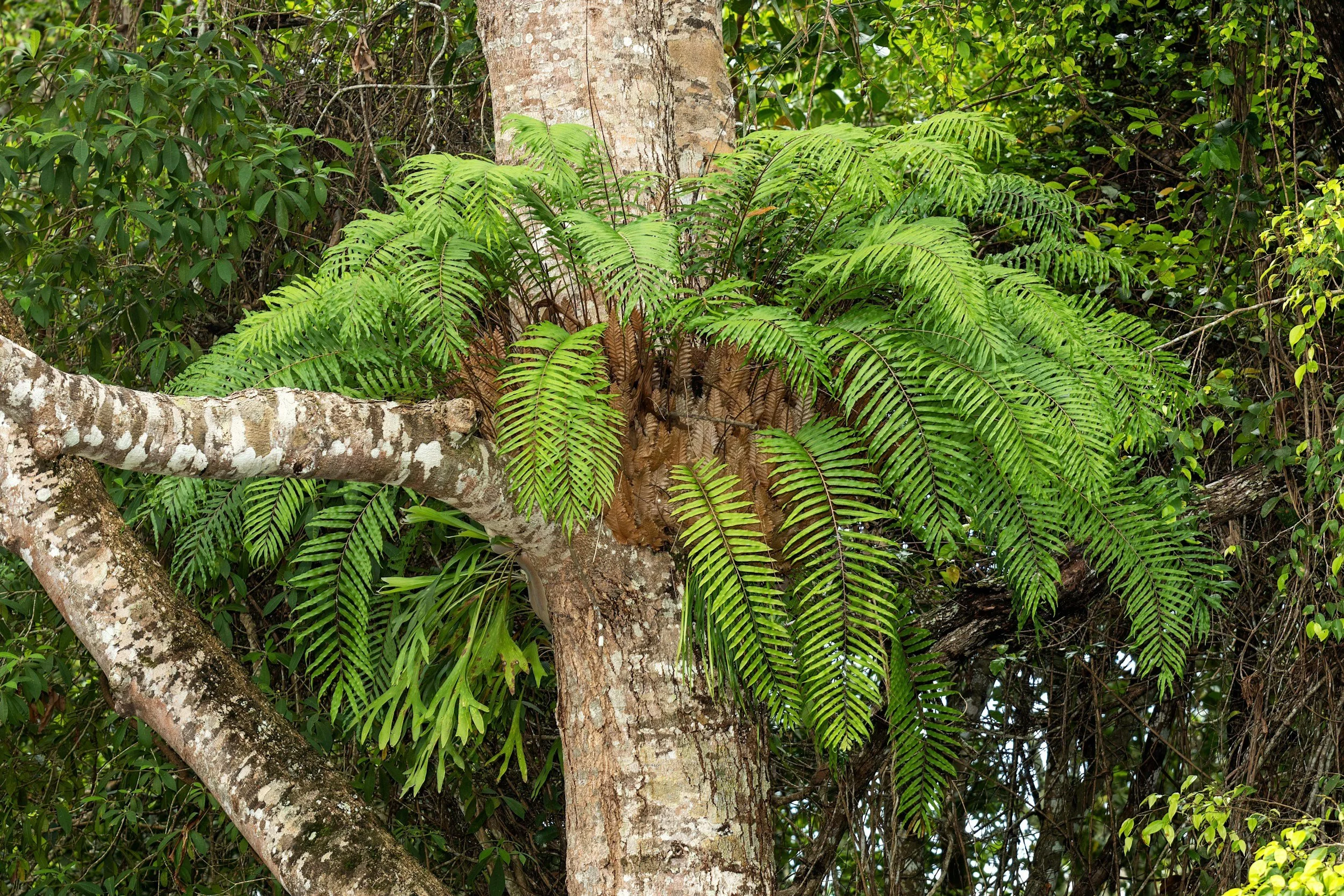
Epiphyte Fern
One common thing across these plants are their root systems; take orchids for example. Orchids can produce scraggly roots both in the pot but also out, and this is because in the wild they cling to the sides of trees or a branch. This is also a reason why orchids are planted in barky soil or sphagnum moss, because those mediums mimic the same as in the wild, as well as provide the aeration that their roots love.
Epiphytes derive their nutrients and water from rain sliding down barky trees or debris from falling leaves that provide fertilization. They also absorb moisture from the air, which is why they’re mostly found in tropical, humid environments.
Bromeliads are another family filled with epiphytes. They range from guzmania to tillandsia and they cling to bark and hydrate themselves by catching rain water in the cups of their leaves, near the center stem. They also catch bugs and plant matter in there, which provides nutrients.
Many epiphytes spread by producing off-shoots known as pups, and those become new plants. Seeds also spread via wind or pollinators.
Epiphytic ferns like the Birdsnest, Staghorn, and Rabbit Foot, are a lot of times displayed on slabs of wood with their rhizomes balled with sphagnum moss. These varieties latch to trees or moss floors in the wild, especially the grand staghorn which can grow as large as the hood of a car. The nature of these ferns makes them stand out as drought-tolerant in the fern family.
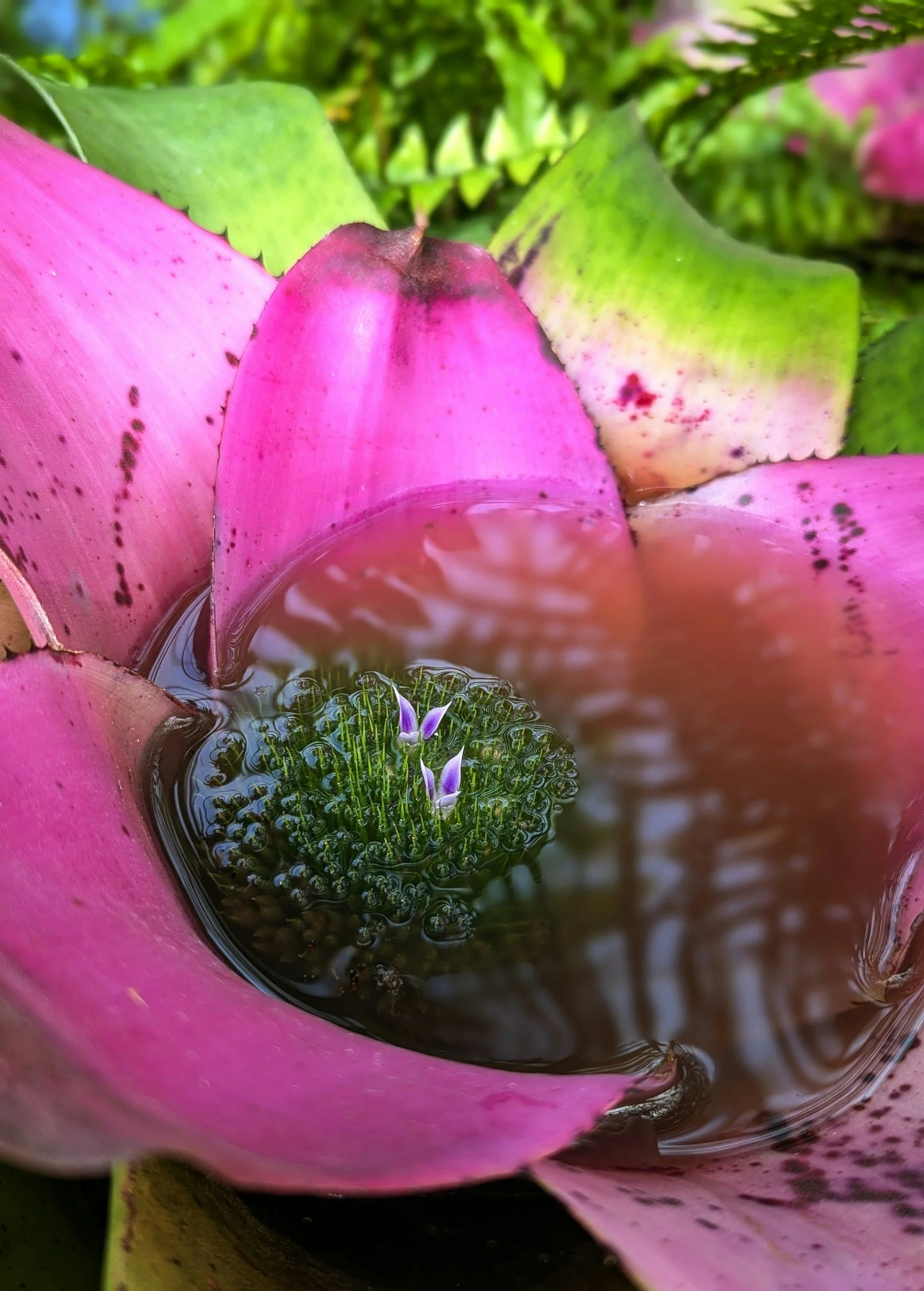
Bromeliad Cup
How to Display & Grow Indoors
Many epiphytes can be planted in a well draining potting mix with no problem. Plants like Tillandsia, also known as Air Plants, don’t require any medium at all. Orchids are best planted in bark or moss due to their root system, which likes to grip things. However you will still see plenty of bromeliads and ferns in pots at local garden centers, and they will continue to grow just fine.
Other methods of planting are kokedama, which is a Japanese form of creating a moss ball that wraps the root system. Wooden boards with sphagnum moss and a plant tied to it is another unique way to display your plant, and staghorn ferns are most known for this.
Watering
Most plants want to dry out in between waterings, but some are a little more drought tolerant than others. Plants like Tillandsia prefer regular misting. Ferns and bromelaids would love a humid environment, such as a bathroom with a good amount of light. Orchids, as most know, prefer bright light and want to dry out pretty well in between waterings. When watering orchids, we don’t recommend the ice cube method, as in the wild the water is warmer and it typically doesn’t give enough water when it’s thirsty. Make sure the water drains and run it again if your medium is barky.
Maintenance and Fertilizer
If your epiphyte is planted in soil, you can fertilize with a water-soluble all purpose indoor fertilizer. Orchids typically have their own type of fertilizer as well, and you can follow the instructions of the brand you decide to purchase. We always recommend once a month for a happy and healthy plant!
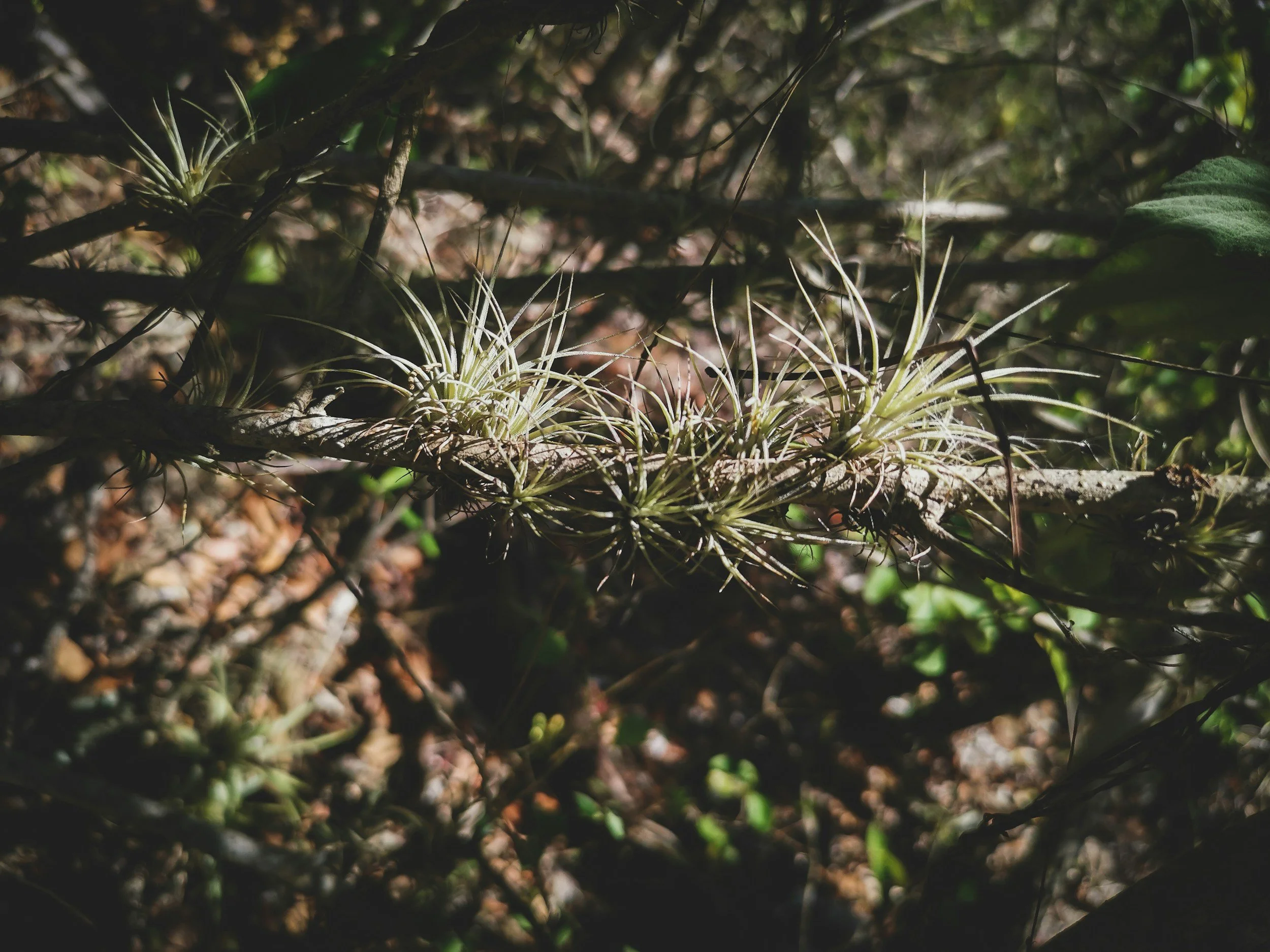
Tillandsia (Airplant)